CrowdCave: Stereo Crowds in a VR Cave
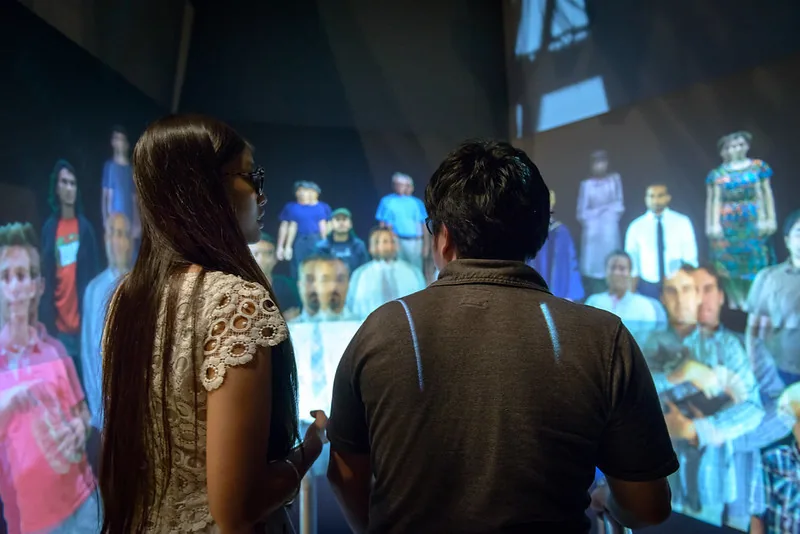
An immersive art performance at UC San Diego's IDEAS (Interdisciplinary Digital and Electronic Arts) event, where audiences stood inside a virtual reality cave surrounded by digital crowds.
The Performance
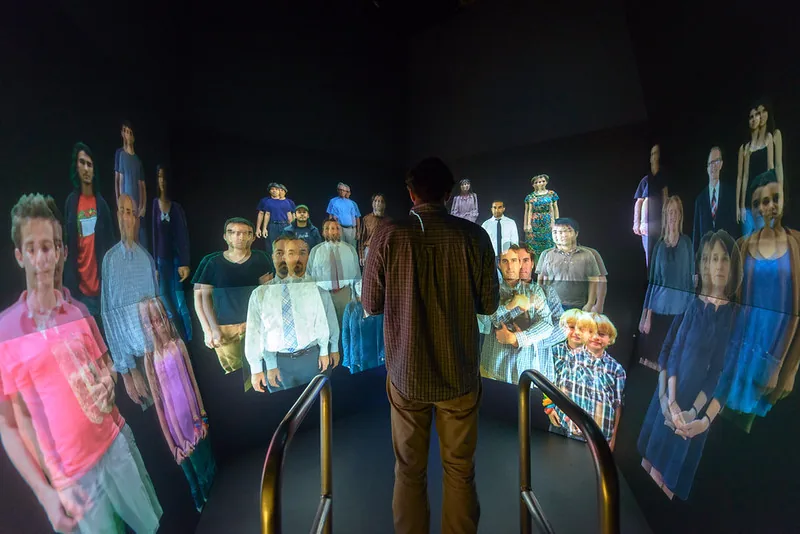
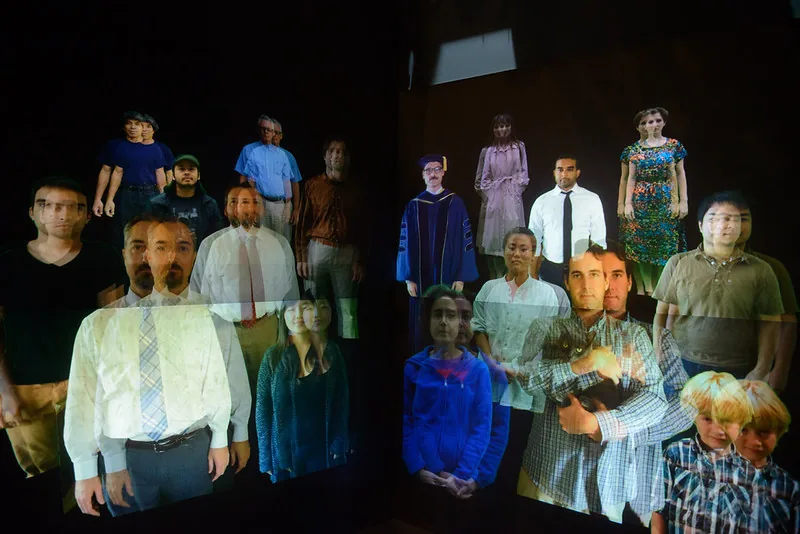
CrowdCave was an immersive art performance created for the IDEAS 2015 event at UC San Diego. IDEAS brings together artists, engineers, and researchers to create work at the intersection of art and technology. Our piece took the digital crowds developed through our earlier VideoMob work and placed them inside a VR CAVE, where audiences stood surrounded by stereo projections of the composite crowd.
The CAVE (Cave Automatic Virtual Environment) at UC San Diego is a room-sized VR system where images are projected on multiple walls, floor, and ceiling. Inside the CAVE, participants feel as though they are standing within a crowd of virtual figures, all assembled from real video recordings of individual people.
From VideoMob to CrowdCave
CrowdCave evolved from the VideoMob project. It took the same idea — connecting strangers through digital crowds — and scaled it into a room you could stand inside. Where VideoMob played on a screen, CrowdCave surrounded the viewer in stereo. Like VideoMob, it is part of artist Emily Grenader's ongoing series of works about crowds.
Gallery
Team
Emily Grenader, M.F.A., Danilo Gasques, Ph.D., Sylvia Li, Jimmy Nguyen, Wender Xavier, Nadir Weibel, Ph.D.
Acknowledgments
This work was presented as part of the IDEAS performance series at UC San Diego, supported by the Qualcomm Institute and the UCSD Library's digital media resources.