Field Notes from a Wind-Down
I don't know what I am building. I know who I am building it for.
This past week has been tough. My co-founder and I decided to wind the company down.
I want to be honest: this is hard, and there's no version of this note that doesn't feel like a small loss. But it's also right. Over the past months it's become clear to both of us that we're each meant to keep building — just on different paths, toward different visions. Recognizing that early, honestly, and as friends is something I'm grateful for.
Walking away from the company doesn't mean walking away from the pursuit that inspired it. Looking back at everything we've shipped, the strongest signal wasn't the product. It was who used it. Baristas at coffee shops. Cooks at Wendy's. Pet owners with their cats. We were the first to put AI in their hands — not because they cared about AI, but because it solved a problem they had right then. The kind of thing they could have googled and didn't.
These users are the two thirds of Americans who haven't yet used AI.* Every major lab is building for the other one third — the engineers, the marketers, the people who already live on a laptop. No one is building for the two thirds. I think the next trillion-dollar company will be.
What they don't want
The barista doesn't want to turn her voice into slides. The pet owner couldn't care less about making an app. Whatever AI ends up doing for these users, it will not look like a productivity tool with a "make slides" button duct-taped onto it.
That's what I keep returning to. We have a generation of AI products built for people who already know what they want from a computer. The next generation has to be built for people who don't think in those terms at all — and whose problems live somewhere other than a screen.
Anton†
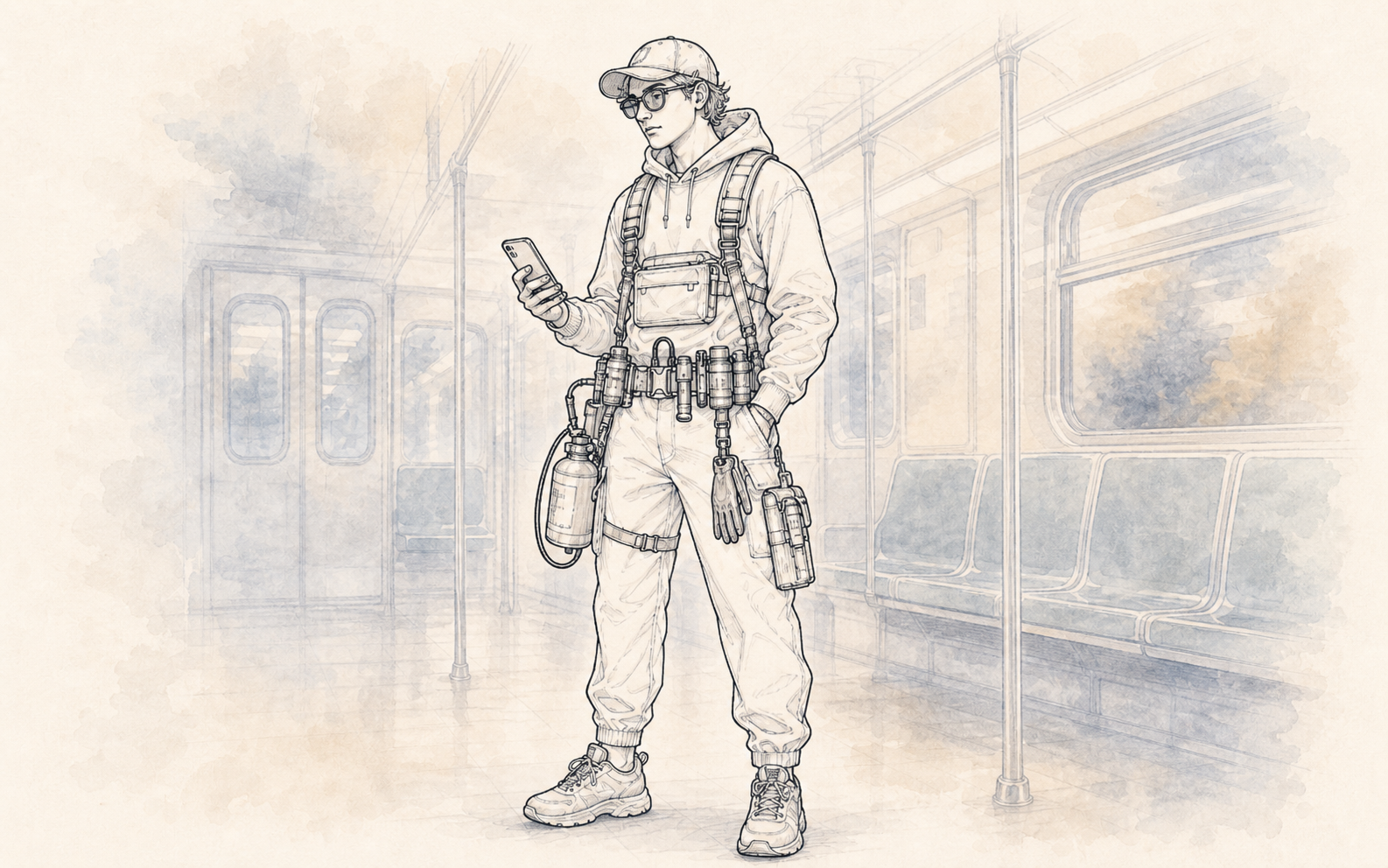
I met Anton on the subway last week. He stood out because of the tools hanging off him — pliers, tape, things I didn't recognize. I looked at his phone. Thousands of games. No ChatGPT. No Gemini.
We started talking. Anton is an exterminator, and he's good at what he does. He told me about the pain of getting customers to clean their homes so the bugs don't come back. He agreed to let me watch him work.
I don't yet know what Anton's real pain points are. Even the best people in a craft can't always name them — the friction is invisible until you're standing next to them. That's the whole point. It's going to take several Antons, Selenas, Rachels. But this is the only way to find the problems worth solving for them.
The approach
I am taking a different approach this time, and it starts with observation.
The two thirds are not on LinkedIn. They are not on X. They are not at SaaS conferences. But a representative slice of them is on the subway, in the bodegas, in the kitchens, in the apartment buildings of New York City — a few stops from where I live. There is no easier user research in the world, and almost no one in tech is doing it.
I don't know what I am building. I know who I am building it for. That is enough to start.
Why I think I can build this
I have spent the last decade building systems that move what an expert knows to someone doing it for the first time. CPR for first-time rescuers. Surgical procedures for novice surgeons. Sketch-based authoring tools so designers without code could build in 3D. The throughline has always been the same: the human interface for hard things. The method is always human-centered design: from pain point to solution, not the other way around.
Observation that compounds
As I mentioned, I don't know what I will build, but I know that I have to observe. It is cool that Anton will let me watch him do his work, but is that scalable? There has to be a better research method, one that gives him something useful while I watch. And it can't be a side effect of the research method — it has to be the business model in miniature. The product earns its way into the work by giving something back, every time. If I get that loop right, observation isn't slow. It compounds.
Why now?
Most solutions will have some form of technology, and what changed in the last three years is that the machine side of that problem mostly got solved. Models can now write the code, hold the context, adapt to the moment. The unsolved part — and the part almost no one in AI is working on, because the industry is busy automating digital labor for the people who already use computers — is the human side:
- How do you reach someone who isn't sitting at a laptop?
- How do you capture what they know without getting in their way?
- How do you give them something useful in the same moment you're learning from them?
Why this matters
I care about what the next interface in computing looks like. As more digital labor gets automated, the question of what personal computing is for gets reopened. The answer won't come from the people who already have a relationship with their computer. It will come from the people who don't — and from watching what they reach for when AI is finally built around their lives instead of ours.
This effort doesn't start when the rest of us lose our computer jobs. It starts now, with Anton.
Footnotes
* AI is spreading fast, but the mass market is still wide open. Pew found in 2025 that only 34% of U.S. adults had ever used ChatGPT, meaning two thirds still had not. By late 2025, YouGov found that just 35% of U.S. adults used AI tools weekly, while 30% had not used AI at all. And in 2026, Quinnipiac found that 27% of Americans still volunteered that they had never used AI tools. The next trillion-dollar AI company may not be built for the people already living in ChatGPT — it may be built for everyone still outside it. ↑
† Name changed for privacy. ↑